Showing posts with label poetry. Show all posts

21 February 2009

Islamic Medieval Poetry...Because You Wish You Were This Awesome

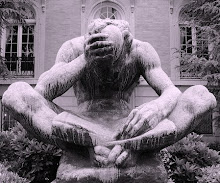
"On A Little Man With A Very Large Beard," by Isaac Ben Khalif


How can thy chin that burden bear?
Is it all gravity to shock?
Is it to make the people stare?
And be thyself a laughing stock? When I behold thy little
feet
After thy beard obsequious run,
I always fancy that I meet
Some father followed by his son. A man like thee
scarce e'er appeared--
A beard like thine--where shall we find it?
Surely thou cherishest thy beard
In hopes to hide thyself behind it.

19 February 2009

It's Always the Last Place you Look, or A Revised Orals Prospectus

[Author's Note: This is the last version of my Orals prospectus. If this one doesn't go through, I think I'm quitting. Really. It is a version of what came before, but if you compare the two, there are very few superficial similarities...which I a good thing, I hope.]

Monsters and the Construction of Community in Medieval Literature

A little more than seventy years ago, the venerable J.R.R. Tolkien urged Anglo-Saxonists to rethink their approach to Beowulf. Up to this point it had often been considered a poor example of Old English poetry, but Tolkien thought in order to understand the poem as a poem one must examine its monsters. They were not, as the prevailing wisdom ran, “an inexplicable blunder of taste”; instead, he argued they were “essential, fundamentally allied to the underlying ideas of the poem.”[1] Thus began the genealogy of monster theory in medieval literature.

Over the years the approaches have changed: in 1936 Tolkien thought a study of Beowulf’s monsters would lead to the recognition of its literary merits and its placement within a specific genre. Contemporary medieval monster theorists, however, are more attracted to the analysis of monsters as boundary figures. The general shift in approach may have moved from formalism and structuralism to post-structuralism and cultural criticism, but the focus has never strayed from the monsters themselves.

Whether those monsters are medieval creations like the Grendelkin and Chretien de Troyes’ Harpin or their more contemporary brethren like Dracula and Freddy Kreuger, they may be characterized by a single tenet: monsters are what they are because they are both physically and culturally transgressive.[2] This formulation transcends both cultural and historical contexts, but how monsters break these rules, on the other hand, is wholly dependent on the specifics of culture and history. Beowulf’s Grendel and Bram Stoker’s Dracula are not the same in their goals or methods, but their transgressions still fall into either the physical or cultural category. Grendel has glowing eyes and steel-like claws; Dracula is undead and can turn into a bat. Grendel is inimical to the weapons and armor so important to the humans of the poem and mocks the feast hall by making men into the meal; Dracula drains the Life Force from his victims and unleashes female sexuality in a way that threatens the Victorian sensibilities of the male
characters.

Each transgression (be it Grendel’s cannibalism or Dracula’s shape-shifting) necessarily marks a boundary—for without a line there is no crossing, no transgression. For Jeffrey Jerome Cohen and the other medieval monster theorists who largely follow his lead, the boundary is limned by the creator(s) of the monster. It is through their monsters that they tell us what they believe should not be possible, what they believe one should not think, speak, or do.[3] In short, monsters have always done the job from which they got their names: they point out and show the line between “us” and “them,” this side and the Other side.[4] Such a function was as true for the Victorian era as it was for our era of examination, the Middle Ages. It has also led Cohen to describe monsters as “the primary vehicle for the representation of Otherness in the Middle
Ages,” a statement on which there is widespread consensus.[5]

This consensus deals with a functional analysis of monsters. Gone are the days of trying to identify Grendel or Harpin ontologically; the question of what they actually were is of less interest than the question of what they do in texts and the effects of those actions on an extratextual scale. As boundary figures, monsters symbolize the Other as they define knowledge and community values by demarcating their outer limits.[6] Such a reading of monsters is not new and relies heavily on the Lacanian theory of the mirror stage—in which the infant uses her image in the glass to create an imago, or false vision of her Self. Key for monster theorists is the exteriority of the image: the use of a mirror’s image creates the Self, but at the same instant introduces the structural possibility of the Other.[7] Lacan’s ideas have been extended by Hayden White into the realm of cultural criticism; he theorizes that communities must use “ostensive self definition by negation” to think of themselves as communities.[8] For White, examples of medieval wildmen served to define what authors meant by “civilized,” “us,” or even “human.” The distinction is one that easily extends from wildmen to monsters, where they are agents of the Other and the negative by which a definition is created. Such a reading has gained traction with monster theorists. Most have accepted the premise that because communities are unable to craft positivist definitions of themselves, they use monsters as didactic exempla of transgressive behavior to work out what is not a part of their community and, conversely, help outline what is a part of it.

Such is the current state of monster theory as it applies to the Middle Ages: we mostly agree that monsters negatively define the cultures and communities that created them. However, no one has undertaken a serious, sustained interrogation of the specific processes by which monsters help form communities. I am interested in moving past what monsters do (boundary markers) to examine how monsters function and the consequences of those processes; that interest has brought me to the two following questions:
  1. What is the process by which communities adopt, adapt, or create monsters?
  2. How do monsters work to strengthen the communities’ sense of themselves?
My plan for this project is to examine how two very different medieval texts—Beowulf and Chretien’s Yvain—answer these questions. Written by an unknown Anglo-Saxon poet, Beowulf is the product of a society that retained significant Germanic cultural mores like tribalism and adherence to the warrior code. In contrast, Yvain was written in the so-called High Middle Ages within a French courtly milieu that valued the stylized virtues of chivalry and courtly love. Geographically and chronologically separated, each text deals with its monsters and their social threat in a distinctive way. Each does, however, deal with monsters and their social threats, so it will be instructive to compare how Anglo-Saxon and later medieval French communities incorporated and responded to their own monsters.

The examination will begin by exploring the process by which the monsters of these two texts were (re)created. In Beowulf, I will look at how the Grendelkin threaten the community through their relationship to weapons. Certainly this culturally transgressive behavior is one among many they exhibit (cannibalism, silence, dress, etc.). But in a world where weapons have names and even lineages, it is significant that both Grendel and his mother do not use weapons favored by the human warriors of the poem and that Grendel himself seems to be enchanted against harm from Geatish and Danish swords. Likewise, a close study of Yvain shows the giant, Harpin, to be a threat to chivalric sexual mores because he is attempting to extort a lord’s beautiful, virginal daughter. Since he is usually shorthand for libidinal excess, a giant carrying off of a virgin is an obvious threat to female purity, but Harpin’s actions are much more subtle and significant: he does not desire her but instead plans on prostituting the courtly maiden to his knaves and dishwashers—the lowest members of his household. In Harpin, Chretien was able to present a threat not only to the idealized female purity upon which courtly love was built but also to the heteronormative vision of masculinity upon which chivalry was built.[9]

Through the above examination, I hope to establish that communities (re)create monsters based on their own highly-prized cultural practices—in this case weapon use and sexual customs. The monster is created from foundational cultural beliefs and so can be thought of as a constellation of transgressions. These transgressions cut to the quick, threatening or questioning cultural practices that are, arguably, the defining characteristics of any community. To help explain how monsters define and strengthen a community’s sense of itself, I will turn to Benedict Anderson’s theory of imagined communities.[10] In both texts the monster is defeated, a sort of tableau vivant that plays out again and again—whether it be in classical, medieval, Victorian, or contemporary horror fiction. Grendel’s defeat by Beowulf and Harpin’s by Yvain signify not only the triumph of the individual heroes, but also the triumph of the cultural mores they defend. These mores, according to Anderson, are the very things that bind individuals together, making—and remaking—socially-constructed communities that are based on specific shared traits. It is in a community’s identity-formation that the function of the monster is most important; as a constellation of transgressive qualities, the monster is defeated, reaffirming a particular value set and in turn (re)defining or (re)constructing the community. If we can understand the construction of medieval communities, we can better comprehend how they envisioned themselves and their place in the world. Such an understanding has consequences far beyond the monsters in Beowulf or Yvain, for through their nightmares these communities tell us who they were.

Notes:
1 “Beowulf: The Monsters and the Critics.” Proceedings of the British Academy 22 (1936): 245-95. 261.

2 Jeffrey Jerome Cohen. “Monster Culture (Seven Theses).” Monster Theory: Reading Culture. Ed. Jeffrey Jerome Cohen. Minneapolis: U of Minnesota P, 1996. 3-25. 6.

3 For limits on thought, see Cohen’s “The Limits of Knowing: Monsters and the Regulation of Medieval Poplar Culture.” Medieval Folklore 3 (1994): 1-37. For limits on speech, see David Williams’ Deformed Discourse: The Function of the Monster in Mediaeval Thought and Literature. Montreal: McGill-Queen’s UP, 1996. For limits on action, see John Block Friedman’s The Monstrous Races in Medieval Art and Thought. Syracuse: Syracuse UP, 2000.

4 The Latin monstro means to “show” or “point out” and is the root of the Modern English “demonstrate.”

5 “The Use of Monsters and the Middle Ages.” SELIM: Journal of the Spanish Society for Medieval English Language and Literature 2 (1992): 47-69. 49 (Emphasis mine).

On this consensus, see also: Noël Carroll. The Philosophy of Horror. New York: Routledge, 1990; Albrecht Classen. “Medieval Answers to the Strange World Outside: Foreigners and the Foreign as Cultural Challenges and Catalysts.” Demons: Mediators Between This World and the Other. Eds. Ruth Petzoldt and Paul Neubauer. Frankfurt: Peter Lang, 1998. 133-51; Edward J. Ingebretsen. “Monster-Making: A Politics of Persuasion.” Journal of American Culture 21.2 (1998): 25-34; and Franco Moretti. “Dialectic of Fear.” Signs Taken for Wonders: Essays in the Sociology of Literary Forms. Trans. Susan Fischer, David Forgacs, and David Miller. London:
Verso, 1988. 83-108.

6 About a monster’s physical (taxonomic) transgressions there is much to say. However, it is here that I must focus on the cultural side of the ledger. For more on physical transgressions and boundaries of knowledge, see Cohen’s “The Limits of Knowing: Monsters and the Regulation of Medieval Poplar Culture.”

7 Lacan associates this self/Other split that occurs during the mirror stage with Freud’s Innenwelt and Umwelt. See Lacan’s “The Mirror Stage” in Ecrits: A Selection. Trans. Alan Sheridan. New York: Norton, 1977. 1-10.

8 Tropics of Discourse: Essays in Cultural Criticism. Baltimore: Johns Hopkins UP, 1978. 151-52.

9 See: Lee Ramsey. Chivalric Romances: Popular Literature in Medieval England. Bloomington: U of Indiana P, 1983, and Cohen. “Decapitation and Coming of Age: Constructing Masculinity and the Monstrous.” Arthurian Yearbook III. Ed. Keith Busby. New York: Garland, 1993. 171-90.

10 Anderson discusses imagined communities in the context of modern nationalism and its rise, but mutatis mutandis, his theory will be applicable to community formation, whether or not nationalism is involved.

05 February 2009

Every Time I Think I'm Out...They PULL me Back in

My Orals proposal was rejected!


Soooooo, since it bounced like a Bernie Madoff check, I guess I have my work cut out for me. I need to figure out what the hell's confusing about this thing; the trouble is, like my students, I'm so close to it that I can't see the confusing parts, the logically flawed parts. It seems to make total sense to me, but not to a group of non-medievalists who don't know what the hell monster theory is.

I was already pretty concerned about oversimplifying monster theory as a movement, so it's ironic that it was decided I didn't explain it clearly/simply enough. Maybe I should contextualize monster theory within the post-structuralist and cultural criticism movement, but I footnoted the proposal pretty heavily. I didn't think I had to explain much in the way of who two of the biggest names in medieval monster theory are; I mean, I think I introduced my sources pretty well (not the USSC Justice, but that was an parenthetical, explanatory note, not a supporting/resource note).

I also heard that they were confused a bit by the primary texts--that because they weren't medievalists, they didn't quite follow what I planned to do with/to Harpin and Grendel. I'm not at all sure what to do about this problem; I was unaware that I was writing to a general academic audience. I thought I was writing to my chair since he and other medieval-types will be on the Orals Committee, but now I have to do the most difficult thing a writer can attempt (besides adapting Ulysses to the screen). I have to think like a non-medievalist, and I honestly don't know if I can do that. I've put a call out to medievalists and non-medievalists for some help in identifying the problems, but I can't wait. I have to start out now, so I'm going to take it bird by bird, as Anne Lamott would say.

First off, the initial paragraph.


Original:
For years—at least since John Block Friedman’s 1981 book The Monstrous Races in Medieval Art and Thought and Jeffrey J. Cohen’s debut on the scene in the early 1990s—monster theory has been overwhelmingly concerned with reading monsters as marginal figures that demarcate the cultures that create them. Freddy Krueger, Frankenstein’s monster, the Giant of Mount St Michel, the Grendelkin, or Polyphemus mark the boundaries of what is and is not possible. Perhaps more importantly, they serve as outer boundaries of what an individual can or cannot think, speak, or do. In short, they have usually been read as “the primary vehicle for the representation of Otherness in the Middle Ages”; in fact, on this there is a rare and surprisingly widespread consensus.
Redux:
Back in 1936, the venerable J.R.R. Tolkien urged Anglo-Saxonists to rethink their approach to Beowulf. Up to this point, the poem had largely been used as a historical document rather than a poetic work, but Tolkien thought we should not ignore the monsters of the poem. They were not, as so many had previously thought, "an inexplicable blunder of taste"; instead, he argued they were "essential, fundamentally allied to the underlying ideas of the poem" (261). And so began the genealogy of monster theory in medieval literature.

Over the years, the approaches and theories have changed with the shifting sands of academic trends. Tolkien thought a closer examination of the monsters of Beowulf would lead to a better understanding of its literary merits, its generic placement, and the theme of a hero's courage. Currently, medieval monster theorists are concerned less with these aspects of the poem; at least since John Block Friedman’s 1981 book The Monstrous Races in Medieval Art and Thought and Jeffrey J. Cohen’s debut on the scene in the early 1990s, monster theory has been largely concerned with reading monsters as marginal figures that demarcate the cultures that create them.

The general shift in approach may have moved from a formalist bent to post-structuralism and cultural criticism, but the focus of the approach never has. Monsters--be they medieval creations like the Grendelkin or the Giant of Mount St Michel or their contemporary brethren like Frankenstein’s monster, Dracula, or Freddy Kreuger--mark boundaries. For Tolkien it was the boundary of what is and is not a poem, a lyric, or a hero. For Cohen and other contemporary monster theorists, it is the boundary of what is and is not possible and of what an individual can or cannot think, speak, or do. In short, contemporary monster theory has usually read monsters as “the primary vehicle for the representation of Otherness in the Middle Ages”; in fact, on this there is a rare and surprisingly widespread consensus.

There, that can't be worse than before...or can it?


06 January 2009

Pending Orals Prospectus


[Author's Note: This is the version of my Orals prospectus that has now been submitted to the shadowy organization known as the Graduate Committee. Hopefully, it will be accepted--unless they don't like being called a "shadowy organization."]

For years—at least since John Block Friedman’s 1981 book The Monstrous Races in Medieval Art and Thought and Jeffrey J. Cohen’s debut on the scene in the early 1990s—monster theory has been overwhelmingly concerned with reading monsters as marginal figures that demarcate the cultures that create them. Freddy Krueger, Frankenstein’s monster, the Giant of Mount St Michel, the Grendelkin, or Polyphemus mark the boundaries of what is and is not possible. Perhaps more importantly, they serve as outer boundaries of what an individual can or cannot think, speak, or do.[1] In short, they have usually been read as “the primary vehicle for the representation of Otherness in the Middle Ages”;[2] in fact, on this there is a rare and surprisingly widespread consensus.

This widespread consensus, however, has made for an awkward moment in monster theory. Such agreement has left many unsure as to how we should proceed, and some have focused their attentions on other projects. Indeed, conversations with fellow members of the BABEL Working Group such as Cohen, Eileen Joy, and Karl Steel have shown that while monsters are still a source of discussion, scholarly interest in them is beginning to wane in favor of attendant issues (hybridity, sexuality, medieval concepts of the human, etc.). As many who were once heavily involved in monster theory have foreseen, academic agreement quickly becomes academic stagnation. Thus, what was once the study of characters who could petrify with fear is itself in danger of sinking into the swamp and becoming petrified by consensus.

What have not been agreed upon—or even hotly debated—are the functions of monsters as boundary figures. We may agree that as symbols of the Other they demarcate, and we may even agree (though to a lesser extent) on how they go about doing so. But to my knowledge no serious, sustained interrogation has been performed on their function as means of community-formation. Boundary figures by their very nature create an inside and outside. As the Lacanian imago immediately introduces the structural possibility of self/not self, so too does the monster introduce the structural possibility of us/them.[3] This interpretation denies any positivist model for definition, and it is the basis on which Hayden White forms his idea of “ostensive self-definition by negation.”[4] He argues that cultures are largely unable to create an overall definition of what they are and so point to a thing that they are not.[5] Following White’s theory of how the concept of “wildness” served to define “human” or “civilized,” we may read monsters as boundary figures that aid in the creation of a culture’s (negative) definition—of defining what it is by demarcating what it is not.

But how do communities define themselves in this way? What is the process by which they adopt, adapt, or create monsters, and exactly how does this work to strengthen their sense of themselves? It will be the goal of this project to suggest an answer to those questions. As I stated before, the purpose of monsters is understood quite well: they reinforce commonly-held cultural practices—foodways, speech, or ethical precepts—by threatening and questioning them in a fictionalized (and thus circumscribed) manner. I plan on quickly sketching how this process plays out in medieval heroic episodes, both early and late: weapon-use in the case of Beowulf’s Grendel, and sexual mores in Chretien de Troyes’ Harpin. Having established the process by which cultural features are reinforced, I will next turn to Benedict Anderson’s theory of imagined communities in which individuals are part of socially-constructed communities based on specific shared traits. Anderson discusses this in the context of nationalism and its rise, but mutatis mutandis, this theory is will be crucial in exploring how the reaffirmation of a particular value works to strengthen or reconstruct the culture as a whole.

Certainly, such a study moves out of the morass that threatens the future of monster theory, but it is a small step. What I seek to do with this project is to take the first step in a large-scale interrogation of monster theory. By investigating one of the foundational—but largely unquestioned—tenets of monster theory I hope to put a finer point on how it is supposed to work and then, in the dissertation, further the study into instances in which it does not work. To my mind, it is usually the exceptions to the rule that are most instructive as to its limits and application. That is, if monsters always threaten the community and are always Other to it, then (via the structural opposition sketched out above) they always have a negative counterpart. The usual reading of epic, heroic, or romance literature places the hero in this position, but such a reading is reductive and ignores contrary evidence such as Marie de France’s werewolf, Bisclavret, or even Beowulf in his earlier exploits. Rather, it is the king who is the obverse of the monster, and the hero exists as a liminal figure—embodying both the civilized and the monstrous in a way that neither the king nor the monster ever can.

NOTES:
[1] For limits on thought, see Jeffrey J. Cohen’s “The Limits of Knowing: Monsters and the Regulation of Medieval Poplar Culture.” Medieval Folklore 3 (1994): 1-37. For limits on speech, see David Williams’ Deformed Discourse: The Function of the Monster in Mediaeval Thought and Literature. Montreal: McGill-Queen’s UP, 1996. For limits on action, see John Block Friedman’s The Monstrous Races in Medieval Art and Thought. Syracuse: Syracuse UP, 2000. [2] “The Use of Monsters and the Middle Ages.” SELIM: Journal of the Spanish Society for Medieval English Language and Literature 2 (1992): 47-69. p. 49 (Emphasis mine). On this consensus, see also: Noël Carroll, The Philosophy of Horror (New York: Routledge, 1990); Albrecht Classen, “Medieval Answers to the Strange World Outside: Foreigners and the Foreign as Cultural Challenges and Catalysts,” in Demons: Mediators Between This World and the Other, eds. Ruth Petzoldt and Paul Neubauer (Frankfurt: Peter Lang, 1998); Edward J. Ingebretsen, “Monster-Making: A Politics of Persuasion.” Journal of American Culture 21.2 (1998): 25-34; and Franco Moretti, “Dialectic of Fear,” in Signs Taken for Wonders: Essays in the Sociology of Literary Forms, trans. Susan Fischer, David Forgacs, and David Miller. (London: Verso, 1988).
[3] Lacan associates the self/not self split that occurs with Freud’s Innenwelt and Umwelt. See Lacan’s “The Mirror Stage” in Ecrits: A Selection. Trans. Alan Sheridan. New York: Norton, 1977.
[4] Tropics of Discourse: Essays in Cultural Criticism. Baltimore: Johns Hopkins UP, 1978. pp. 151-52.
[5] US Supreme Court Justice Potter Stewart produced a lasting example of ostensive negative definition in 1964. Admitting that he could not define pornography, he then stated “I know it when I see it, and the motion picture involved in this case is not that” (Jacobellis v. Ohio. 378 U.S. 184. Supreme Ct. of the US. 22 June 1964).

30 September 2008

Clothes Make the Monster: Armor and the Grendelkin's Status as Monsters

Here's a preview of my paper at SEMA in St. Louis.

Two years ago in Yorkshire, Aishah Azmi, a teaching assistant at a C of E school, was suspended because she refused to remove her niqab in the presence of males—the result of a not uncommon interpretation of the Koran that demands modesty from women. Then-Prime Minister Tony Blair called the full-face veil “a mark of separation” that “makes people from outside the community feel uncomfortable”; Ms. Azmi countered that the niqab is an important part of her culture and “Muslim women who wear the veil are not aliens.” Ellen Goodman of the Boston Globe took the argument further linking Ms. Azmi’s niqab to the inadvertent support for “the mullahs of repression.”

Now, whatever our individuals thoughts on this particular issue, it is an exemplum of the way cultural tensions erupt in specific, concrete ways—in this case over a single piece of cloth placed somewhere on the body Western society deems disagreeable. These tensions often play out behind the guise of cultural markers—diet, speech, taboos, dress. Each is easily exaggerated into stereotypes: the Irish eat potatoes; barbarians don’t have a symbolic language (or don’t speak Greek); higher caste Hindus used to avoid contact with Dalits (the Untouchables); Native Americans wear feathered headdresses and buckskins.

These cultural markers were at work in medieval texts and characters, too. In his seminal The Monstrous Races in Medieval Art and Thought, John Block Friedman extended their application to the monsters of the Middle Ages. What we have found since then is that a monster is largely a creation of cultural markers important to its creator and cultural context.

Nevertheless, our interpretation of the Grendelkin has continued to be as problematic as it was in 1936 when Tolkien redirected our thinking on them. One of the basic problems with the current conversation on Grendel and his mother is that we keep trying to apply an ontological definition to them when a functional one is more instructive and viable. I think we should be less concerned with what they are—human exiles, demons, or trolls—and much more concerned with what they do and don’t do in the poem. This paper, which is a small part of a research project, represents my attempt to tease out more information and further direct our thinking about the Grendelkin by examining how the poet created their monstrous identity through the cultural markers—specifically that of clothing and armor.

This approach relies on a notion to my knowledge first put forth by Jeffrey Cohen and stated most clearly in Theses 3 and 4 of the initial chapter of Monster Theory. It is this: monsters draw their power to terrify both from their position outside the scope of human knowledge and their threat to social order. Without both of these, you get Sesame Street’s Snuffleupagus on the one hand and Adolph Hitler on the other. Thinking about the monster as both a physical pastiche and a constellation of cultural transgressions is also a way of framing a discussion of the Grendelkin. Their physical monstrous attributes have been much-discussed but they still give only a vague image—one that could just as easily be Tolkien’s cave troll or Sigourney Weaver’s alien nemesis from the film series!

Instead, I think the cultural side of their transgression ledger is a rich vein of inquiry. Returning to my constellation metaphor, we can see the Grendelkin through their cultural transgressions. They violate accepted foodways multiple times. They don’t use symbolic language, whereas fine speaking is a prized ability in Old English literature. They violate cultural conventions about the use of weapons in battle. But what is most interesting to me right now—the star, to perhaps belabor my metaphor, I want to study in this constellation—is their attitude toward clothing—specifically, armor—and how that sets them apart from the human warriors of the poem.

Most of us are aware, on some level, that material goods like armor were crucial to the function of a warrior society like the one depicted in Beowulf. It has a significant function in the principles of exchange demanded by the lord-thane bond. Some armor receives attention to is lineage. Old English grammar even gives armor a limited sense of agency: the mail-coat will often act as the subject by preserving the warrior, who is placed in the object position.

What is pertinent to this examination, however, is the symbolic value armor has in this cultural context. George Clark wrote about this in 1965, and he is worth quoting at length here: “the multitudinous references and allusions to arms and armor pervading Beowulf constitute an imaginative whole, a symbol for the heroic life.” And later: “Arms and armor in Beowulf are…instances of man’s creative power…; they are status symbols, tokens of order and degree in human society; they are heirlooms…; [they] are both gifts and treasures, and as such they betoken both sides of the heroic contract.” Clark’s point here is that armor is tied to the idea of a warrior, but I would extend the significance to each warrior’s status among his fellows. What I’d like to quickly sketch out here is the obverse of the Grendelkin. If the pair is a constellation of transgressions, then Beowulf and the other humans should be a constellation of motifs that serve to support the values of their culture. Thus, I am extending Clark’s notion, and I am reading armor as a way of seeing warriors and as a way of judging them among their peers.

In some ways, material goods are all we’ve got to help us conjure up an image of Beowulf. We have no idea what he looked like—Ray Winstone? Christopher Lambert? Gerard Butler?—but we do get a significant amount of detail about what his helmet and armor when compared to Beowulf’s physical features. There are lots of examples of this scattered throughout the poem (in fact, Beowulf’s burial is focused much more on the armor on the funeral pyre that his body), but the examples on which I’d like to focus are the meetings with the Danish coast guard and Wulfgar.

Between Beowulf’s introduction in line 194 and the revelation of his name in line 343 we get detail that builds on three main ideas: he is Hygelac’s thane (194), he is the strongest of all men (196-97), and his fifteen chosen companions are the bravest warriors he could find among the Geats (206-07). We could rightly expect, then, that the things we find out immediately afterwards would have something to do with these facts. So it is significant that most of what we end up learning about the warriors has to do with their armor and other war-gear. In the 150 lines separating Beowulf’s introduction and his naming—those crucial lines in which the poet paints the initial picture of Beowulf and his brave band for his audience—we get at least ten separate references to armor—four of those being descriptions more detailed than we ever get for Beowulf or his men. The evidence for the Geatish troop being such brave thanes seems to be their terrific war-gear.

But it’s not just the audience who “sees” the nature of Beowulf and his thanes through their armor. When they first land in Denmark, the first thing the coast-guard sees in the glint of the shield bosses (231-32). Then he rides down to the shore and challenges the Geats with “What sort of men are you, wearing armor, protected by mail-shirts?” (237-38). It seems that all the coast-guard can see are Geatish armor and weapons.

But maybe we shouldn’t be surprised by his question. Immediately following, the poet focuses our own vision on the glint and clink of their armor as they advance along the stone path to Heorot. When they do arrive, Wulfgar greets the troop with further focus on their armor. “From where,” he asks them, “have you borne these gold-plated shields, gray mail-shirts, and visored helmets?” (333-39). When we would expect our mind’s eye to be focused most closely on the hero and his men, the poet and characters fix them instead on armor. The Danish men whom Beowulf and his troop first meet “see” the warriors through their armor. It seems a symbolic attitude toward armor and other war-gear is being developed here, that the mail-coats and helmets function as a metonymic representation of powerful warriors.

This metonymic relationship between great armor and a warrior’s status is supported by the Danish coast-guard and Wulfgar. We just saw how much attention the coast-guard pays to Geatish armor, but what is more compelling is that almost immediately after he comments on it, he praises Beowulf: “Never,” he says, “have I seen a greater warrior than this one among you, a warrior in armor” (247-51). The watchman is probably justified in his concern about the intentions of these men because they are well-armored warriors, which makes them potentially dangerous. But he also judges Beowulf’s prowess at least in part based on his armor: for the coast-guard, it seems, Beowulf is the greatest warrior he’s ever seen and certainly not merely a “hall-thane” because he has impressive armor and weapons. As if to dispel any doubt that this is a valid criterion by which to judge a man, the Dane adds “may his visage, his matchless appearance never belie him” (247-51).

The relationship between armor and a warrior’s prowess and nobility is shared by Wulfgar. As does the coast-guard, he notes the impressive armor and weapons the Geats carry. Then he makes a judgment on their character based on that observation alone: “Never have I seen so many foreign men braver in appearance. I think that you in boldness, high courage—certainly not exile—have sought Hrothgar” (336-39). The implications of the Geats’ gleaming armor are clear: battle-gear is symbolic of a warrior’s heroism.

That this is so should not be surprising. As the poem makes clear, the normal avenue for gaining armor, treasure, or swords is either to inherit them or earn them in battle. It stands to reason, then, that if a thane had good, skillfully-made armor, he either come from a good line of warriors or had been successful in battle on his own. Either way, he has access to and membership in the warrior society. Armor, then, is part of signifying the status of a warrior, but it is also crucial to one’s status among fellow warriors—as the coast-guard and Wulfgar show.

But if armor signifies one’s status as a warrior, then what are we to make of those who don’t wear it? What does armor use signify to the Grendelkin. Turns out, not much. Admittedly, we’re hampered in our study of what they wore into battle since, as Michael Lapidge notes, the poet was careful not to give us too precise a description of our antagonists. We do know that they were not ignorant of armor because it litters their hall. This, then, suggests they had no use for it—that it had no significance at all for them. It also indicates that Grendel’s frætewum is not armor.

There’s been a certain amount of confusion over how to translate this word. We’ve gotten translations as various as “trappings,” “ornaments,” “armor,” “finery,” “scaly harness,” and the confusion seems to have led Heaney to just omit it. Klaeber connects frætewum to a warrior who used only his own equipment, but he doesn’t explain what equipment that might be. Dobbie thinks the poet meant to depict him “as being ‘equipped for battle,’ whatever that may have involved in Grendel’s case.” Those very vague suggestions by two giants in the field highlight the paucity of detail we have when it comes to the Grendelkin’s clothing—especially when compared to the attention to armor within human cultural contexts. So while we may never learn what the poet meant by frætewum, I think we can safely say he did not mean armor.

The term’s equation with armor is unlikely since the poet emphasized a level playing field for the fight between Grendel and Beowulf. In lines 677-87, Beowulf remarks that he’d refrain from using weapons because his foe didn’t use them. Immediately before his boast, however, much had been made about Beowulf removing his armor and helmet. It seems obvious that our hero is going to great lengths to battle Grendel on equal terms and that he is relying on the judgment of God to determine the outcome. Because of Beowulf’s faith in God’s judgment of the battle, Morton Bloomfield—and more recently Roberta Frank—see it as an early example of judicium Dei, a trial by combat that, as Bloomfield notes, was “employed under some fixed conditions to determine the will of God.” At the heart of the judicium Dei were those “fixed conditions”: equality in weapons and armor supposedly prevented human influences from obscuring the judgment of God. So a pitched battle would undercut the purpose of the entire exercise. If this interpretation is correct—and the attention to parity between participants and God’s involvement in the duel suggests it is—then the frætewum that Grendel wore could not have been armor or Beowulf wouldn’t have had to shed his.

To my mind, it’s clear that his choice of clothing identified Grendel (and by extension his mother) as an outsider. It may work as a sub-text, but it’s a powerful marker of difference once identified. I might even venture to say it’s one of the main reasons we know they aren’t members of any recognized warrior class—because they don’t adhere to accepted customs. For humans, armor signifies their status as warriors and, along with other cultural markers, helps to create that constellation of heroism that we call the warrior society. The opposite is true with the Grendelkin. They don’t wear any armor—even though they had easy access to it in their hall. So for them, is signifies their status as Other and, along with those other cultural markers, helps to create that constellation of monstrosity.

The poet did not, then, fashion his monster out of whole cloth (if you’ll pardon the pun) but instead from the cultural materials at hand. And in the process of creating the Grendelkin, our poet has given us a glimpse of his own cultures attitudes (and perhaps anxieties) about clothing.
What that leaves us with is perhaps more questions than answers. What does it mean that this particular trait helped create a monster? What—if anything—more can that choice tell us about Anglo-Saxon culture and its attitudes toward…dare I say…fashion? And finally, are the Grendelkin teachers, markers of the wrong route? Or are they (as monsters so often are) symbolic of external cultural groups that were seen as threatening?

11 November 2007

Happy Veteran's Day

We would do well to remember men like Wilfrid Owen--men who gave their lives, of course, but also the men who gave their limbs, their minds, or their youth to whatever The Cause was at the time. Veteran's Day strikes me as a time to acknowledge sacrifice and to account for them, our payments to The Cause. We should see if the scales balance. And if they do not, perhaps we should take a hard look at the value of The Cause.


Dulce Et Decorum Est

Bent double, like old beggars under sacks,
Knock-kneed, coughing like hags, we cursed through sludge,
Till on the haunting flares we turned our backs
And towards our distant rest began to trudge.
Men marched asleep. Many had lost their boots
But limped on, blood-shod. All went lame; all blind;
Drunk with fatigue; deaf even to the hoots
Of disappointed shells that dropped behind.

GAS! Gas! Quick, boys!-- An ecstasy of fumbling,
Fitting the clumsy helmets just in time;
But someone still was yelling out and stumbling
And floundering like a man in fire or lime.--
Dim, through the misty panes and thick green light
As under a green sea, I saw him drowning.

In all my dreams, before my helpless sight,
He plunges at me, guttering, choking, drowning.

If in some smothering dreams you too could pace
Behind the wagon that we flung him in,
And watch the white eyes writhing in his face,
His hanging face, like a devil's sick of sin;
If you could hear, at every jolt, the blood
Come gargling from the froth-corrupted lungs,
Obscene as cancer, bitter as the cud
Of vile, incurable sores on innocent tongues,--
My friend, you would not tell with such high zest
To children ardent for some desperate glory,
The old Lie: Dulce et decorum est
Pro patria mori.

Wilfrid Owen, 1917